

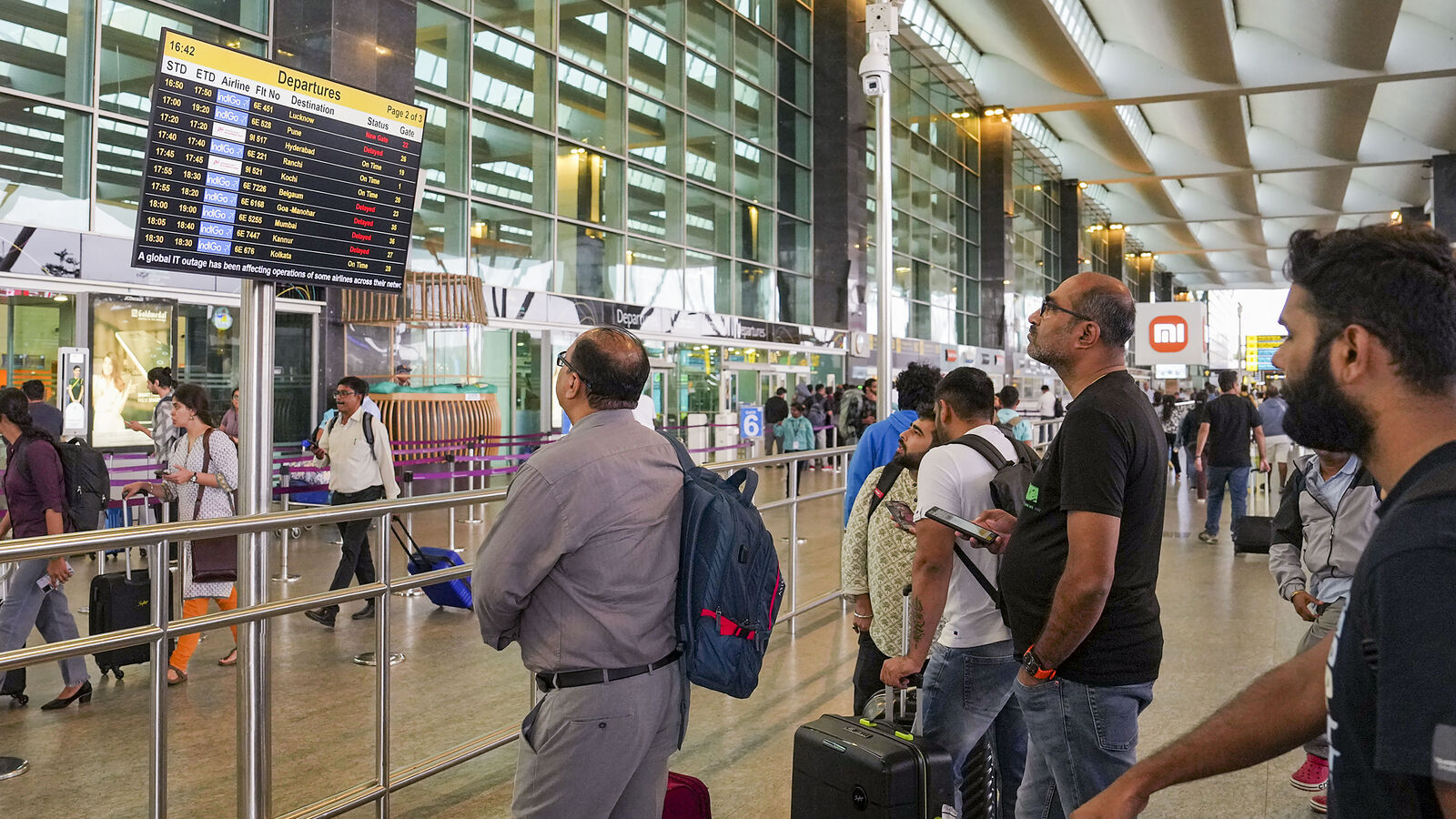
Stepping off an eight-hour international flight into a bustling arrivals hall, your senses are bombarded by a blur of foreign signage, fatigue, and logistics. Before you can grab a taxi or navigate the local subway system, you face an immediate practical hurdle: you need local currency. Right past the customs exit, bathed in inviting neon light, sits a currency exchange counter. Bold banners proclaim zero percent commission and fee-free transactions.
Handing over two or three hundred US dollars feels like the simplest way to solve your cash problem. Yet when the teller slides back a modest envelope of local banknotes, a quick calculation reveals that fifteen to twenty-five percent of your purchasing power has vanished into thin air.
Airport currency booths are not public utilities designed to help weary travelers; they are among the most aggressive retail pricing environments in the travel ecosystem. Understanding how these operators mask their actual costs, where to source cash safely, and how to configure your financial cards before departure will save you hundreds of dollars on every trip abroad.
The Illusion of Free: Decoding the Currency Spread
The fundamental trick of airport exchange booths lies in how they define cost. When an exchange counter advertises “0% Commission” or “No Service Fees,” they are telling a technically legal half-truth. They may not tack on a standalone ten-dollar transaction fee, but their profit is already baked deep into the spread—the difference between the wholesale price of currency and the price they offer you.
Global currency markets operate on the interbank exchange rate, also known as the mid-market rate. This is the real-time baseline rate that banks, hedge funds, and multinational corporations use when trading currencies with one another. It is the exact number that appears when you search an exchange rate on a financial website or search engine.
Retail exchange kiosks at airports widen this spread to an extreme degree. If the interbank market rate dictates that one US dollar equals 0.92 Euros, a competitive bank might trade at 0.91. An airport booth, however, will routinely buy your dollars at a rate of 0.76 or 0.78 Euros. By shaving ten to twenty cents off every dollar you hand across the counter, the operator extracts a massive profit without ever itemizing a formal service fee on your receipt. If you attempt to convert leftover foreign currency back into US dollars at the same booth before your flight home, you will absorb that punishing margin a second time.
These predatory spreads are not an accident. Airport authorities charge astronomical commercial rents to terminal concessionaires. To cover these overhead costs and turn a profit on a shifting, captive audience, currency exchange desks rely on passenger exhaustion and urgency.
The ATM Alternative: Commercial Banks Versus Private Kiosks
For the modern traveler, skipping the exchange counter entirely and withdrawing cash from an Automated Teller Machine upon arrival is almost always the superior financial move. However, navigating the arrivals terminal requires careful attention to the specific machine you choose.
The Threat of Standalone Operator ATMs
Just because a machine has a slot for your debit card does not mean it offers bank-level rates. In international airports, train stations, and high-density tourist areas, the physical ATMs lining the walls are rarely owned by legitimate local commercial banks. Instead, they are operated by independent non-bank financial entities like Euronet, Travelex, or specialized terminal operators.
These independent machines are designed to mimic retail banks while charging staggering fees. In addition to slapping on out-of-network convenience charges of five to ten dollars, these standalone ATMs often enforce compulsory, extortionate currency conversion schemes built directly into the interface screen. A traveler withdrawing the local equivalent of two hundred dollars at an independent airport machine can easily lose thirty to forty dollars purely to artificial markups.
Locating Authentic Commercial Bank ATMs
To secure the true interbank exchange rate, you must find a terminal owned by an established, recognizable national or commercial retail bank in that country—institutions comparable to Bank of America or Chase in the United States.
Genuine bank machines typically reside inside designated terminal banking branches, near postal counters, or tucked away from the main commercial retail corridor. When using a commercial bank ATM, your home financial institution and the card network process the transaction at the wholesale rate, bypassing the inflated spreads of private airport vendors.
The Dynamic Currency Conversion Trap
Whether you are pulling cash from an overseas ATM or tapping your credit card to pay for a train ticket at an airport kiosk, you will encounter the most widespread trap in travel finance: Dynamic Currency Conversion (DCC).
During the transaction, the card reader or ATM screen will detect that your card was issued in the United States. The screen will display a seemingly helpful prompt showing the total cost both in local currency and converted into US dollars. It will then ask: “Would you like to be billed in USD or local currency?”
To an exhausted traveler, paying in familiar US dollars feels transparent and comfortable. In reality, choosing US dollars triggers Dynamic Currency Conversion, authorizing the local merchant’s payment processor to set the conversion rate rather than your home card network.
The foreign terminal provider applies a heavily manipulated exchange rate that includes a hidden surcharge ranging from five to twelve percent above the true market rate. When you decline the conversion and choose to be billed in the local currency, you force the transaction onto Visa, Mastercard, or American Express networks. These networks process the conversion at the wholesale interbank rate with margins that typically hover below one percent.
The universal rule of travel finance is simple: always choose to pay and withdraw in the local currency of the country you are standing in.
Building an Optimized Banking Stack Before Departure
Avoiding airport financial penalties is primarily an exercise in preparation. By assembling the proper mix of banking tools before you board your flight, you can bypass the need for physical currency exchange entirely.
Checking Accounts with Global Fee Rebates
The gold standard for travel debit cards is an account that waives both domestic and foreign transaction fees while reimbursing any local ATM surcharges you encounter along the way.
Specialized checking accounts offered by institutions such as Charles Schwab and Fidelity offer cards with unlimited ATM fee rebates worldwide. When an international bank machine hits you with a five-dollar local withdrawal fee, these accounts automatically refund the cash back into your ledger at the end of the statement cycle. Furthermore, they pass through the raw interbank exchange rate with zero foreign transaction penalties. Having one of these accounts dedicated exclusively to your travel fund eliminates the stress of searching for a fee-free terminal.
Credit Cards with Zero Foreign Transaction Fees
Carrying cash has become secondary across much of the developed world. Relying on a travel credit card that waives foreign transaction fees is far safer, earns rewards, and ensures the best conversion rates available.
Standard consumer credit cards often penalize international usage by tacking on a foreign transaction fee of three percent to every purchase made abroad. On a four-thousand-dollar vacation, that invisible penalty costs you one hundred twenty dollars for the simple privilege of swiping your card. Ensure your primary and secondary travel credit cards explicitly feature zero foreign transaction fees before you pack your bags.
Digital Multi-Currency Wallets
Financial technology platforms like Wise and Revolut provide an exceptional bridge for travelers who prefer not to open an entirely new domestic bank account.
These platforms allow you to hold multiple foreign currencies simultaneously inside a digital account linked to a debit card. You can convert US dollars into British pounds, Japanese yen, or Euros weeks in advance at the live mid-market rate with an upfront, transparent fee that rarely exceeds a fraction of a percent. When you land abroad, you can tap your card or withdraw cash directly from your pre-converted local currency balance, entirely immune to market volatility and surprise airport markups.
Destination Realities: Cash-Heavy Versus Cashless Economies
Your need for airport cash varies wildly depending on your destination. Preparing your currency strategy requires understanding how money actually circulates in the country you are visiting.
The Cashless Frontiers
If your travels take you to the United Kingdom, Iceland, Norway, Sweden, Australia, or the Netherlands, carrying cash is increasingly an operational disadvantage. In London or Amsterdam, city buses, underground turnstiles, coffee shops, and museum ticket booths frequently refuse physical paper notes altogether.
Arriving in these regions and racing to an airport exchange counter to convert hundreds of dollars into paper cash is a complete waste of funds. You can walk straight through arrivals, tap your smartphone or contactless credit card at the airport rail turnstile, and spend an entire week without touching a single paper banknote.
Cash-Dependent Destinations
Conversely, countries like Germany, Japan, and vast swaths of Latin America, Southeast Asia, and Eastern Europe retain a profound cultural attachment to physical currency. While major department stores, transit hubs, and chain hotels readily accept credit cards, small independent restaurants, street vendors, rural transit systems, and historical neighborhood shops require hard cash.
For these destinations, arriving without currency is impractical, but using the airport exchange booth is still unnecessary. Skip the terminal counters, locate a vetted bank ATM inside or immediately adjacent to the arrivals hall, and withdraw a modest sum in local currency using your fee-waiving debit card.
Emergency Protocols for Card Failures Abroad
Despite your best preparations, unexpected friction can occur. A foreign ATM may reject your debit card due to automated fraud safeguards, an unfamiliar terminal might swallow a plastic card, or an overseas bank network may temporarily go offline.
To ensure you are never stranded without transit money at an international airport:
-
Establish a Modest Hard-Currency Buffer: Carry between fifty and one hundred clean, crisp, uncreased US twenty-dollar bills hidden securely in an interior compartment of your carry-on luggage. In true emergencies where card systems fail, US currency is universally recognized. You can surrender a single twenty-dollar bill at an airport exchange counter to purchase enough local transit currency to reach your hotel, minimizing the impact of the booth’s terrible exchange rate.
-
Diversify Payment Networks: Never travel relying solely on cards from a single payment processor. Always carry at least one Visa and one Mastercard. In certain regions, international card terminals experience intermittent outages that affect one processing network while the other functions normally.
-
Configure Mobile Wallet Backups: Before leaving home, link every credit and debit card to your smartphone’s digital wallet. If an overseas ATM retains your physical card, having digital access on your phone allows you to continue tapping for purchases and accessing contactless ATMs throughout your trip.
-
Memorize a Four-Digit PIN: While six-digit PINs are common for domestic accounts in the United States, automated transit ticket kiosks and older foreign bank terminals across Europe and Asia often reject PINs exceeding four digits. Reset your travel debit and credit card PINs to standard four-digit combinations before your departure date.
Airports rely on your fatigue to extract easy revenue. By avoiding the glittering promises of zero-commission exchange booths, rejecting Dynamic Currency Conversion prompts, and utilizing fee-friendly travel cards at authentic commercial bank machines, you protect your travel budget and keep your money where it belongs—funding your experiences abroad.
